Father of modern karate
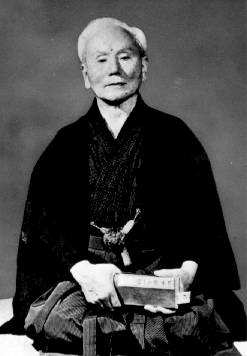
Gichin Funakoshi
1868 – 1957
Founder of Shotokan style, who brought karate from Okinawa to mainland Japan and to the world.
The father of modern karate
Gichin Funakoshi (船越 義珍) was born on November 10, 1868, in Shuri, Okinawa. He began his training in to-te jutsu around the age of eleven under two of the greatest masters of the era: Anko Azato and Anko Itosu. He studied both Shōrei-ryū and Shōrin-ryū, blending their principles.
From Okinawa to Japan
In 1917 — and again in 1922, this time by invitation of the Japanese Ministry of Education — Funakoshi travelled to mainland Japan to introduce karate. He chose to stay, devoting the rest of his life to spreading the art. He changed the written characters of karate from "Chinese hand" (唐手) to "empty hand" (空手), giving the discipline a more universal and philosophical reading.
Shotokan
Shōtō (松涛, "waving pines") was Funakoshi's poetic pen name. His students named the hall where he taught Shōtōkan — "the house of Shōtō." In 1936 the first Shotokan dojo was built in Tokyo.
Legacy: the Twenty Precepts
Funakoshi distilled the essence of his teaching into the twenty principles of karate (Niju Kun) and the Dojo Kun. He did not see these as technical rules, but as guides for "becoming better human beings." He died on April 26, 1957, leaving a heritage we carry today.
"The ultimate aim of karate lies not in victory or defeat, but in the perfection of the character of its participants." — Gichin Funakoshi